Category: CFAA

The Computer Fraud and Abuse Act (CFAA), initially enacted in 1986, is a United States federal statute that primarily addresses the issue of computer-related crimes. The Act serves as a framework for combating fraud, abuse, and unauthorized access in the digital realm, reflecting the growing importance of cybersecurity in the modern world. The CFAA criminalizes a range of activities that involve accessing computers unlawfully or without authorization, and it has been amended multiple times to keep pace with the evolving nature of technology and cybercrime.

One of the key features of the CFAA is its broad scope in defining “unauthorized access.” This term encompasses a variety of actions, from hacking into a computer system to exceeding the bounds of authorized access, such as an employee misusing an employer’s computer system for unauthorized purposes. The Act covers not only federal computers, banks, and financial institutions but also any computer connected to the internet, thus extending its reach to virtually all modern computer systems. Offenses under the CFAA include accessing a computer without authorization to obtain sensitive information, intentionally causing damage to a computer, trafficking in passwords for unauthorized computer access, and threatening to damage a computer.

The CFAA is also notable for its punitive measures. Violations can lead to severe penalties, including fines and imprisonment. The severity of the punishment typically depends on factors like the intent of the offense, the amount of damage caused, and the use of the information obtained through unauthorized access. The Act has been used to prosecute a wide range of cybercrimes, from simple cases of unauthorized access to complex schemes involving data theft, cyber espionage, and damaging critical infrastructure.

However, the CFAA has also been a subject of debate and criticism, particularly regarding its interpretation and potential for overreach. Critics argue that the Act’s broad language, especially concerning terms like “unauthorized access” and “exceeds authorized access,” can lead to the criminalization of seemingly innocuous online behavior and could be used to stifle legitimate research activities in cybersecurity.

In summary, the Computer Fraud and Abuse Act is a critical tool in the United States legal arsenal against cybercrime, offering legal recourse against a wide range of computer-related offenses. While it is a powerful statute for combating serious threats in the digital world, its application and interpretation continue to evolve, reflecting the complexities and challenges of regulating conduct in the rapidly changing cyber landscape.

  • The Crucial Role of the CFAA in Document Shredding

    In today’s digital age, safeguarding sensitive information is more critical than ever. Businesses must navigate the complex landscape of data security laws to protect themselves and their customers from data breaches and cyber threats. One such pivotal regulation is the Computer Fraud and Abuse Act (CFAA). Originally enacted in 1986, the CFAA serves as a foundational pillar in the realm of cyber law, targeting hacking and unauthorized access to computers and networks. However, its implications extend far beyond the digital realm, playing a significant role in the physical security measures businesses adopt, particularly in document shredding practices.

    Understanding the Computer Fraud and Abuse Act (CFAA)

    The CFAA criminalizes unauthorized access to computer systems and has been amended multiple times to address evolving cybersecurity challenges. It encompasses a wide range of activities, from hacking into networks to accessing a computer without authorization. For businesses, this means that any negligence in handling sensitive information, whether digital or physical, could potentially fall under the scrutiny of the CFAA.

    The Importance of Document Shredding in CFAA Compliance

    While the CFAA primarily focuses on digital information, it’s important to recognize that physical documents often contain the same sensitive information stored digitally. These documents, if not properly disposed of, can become a gateway for data breaches, putting businesses at risk of non-compliance with the CFAA. Document shredding emerges as a crucial practice in this context, serving as a physical counterpart to digital cybersecurity measures.

    Country Mile Document Destruction also destroys Hard Drives for you as well.

    Proper document destruction ensures that confidential information, from customer data to internal communications, is irretrievably destroyed, mitigating the risk of unauthorized access and CFAA violations. It’s not just about compliance; it’s about protecting the integrity of your business and the trust of your customers.

    How Country Mile Document Destruction Ensures Compliance and Security

    Country Mile Document Destruction stands at the forefront of secure document shredding services, offering businesses a reliable partner in their quest for CFAA compliance and beyond. Here’s how Country Mile can help:

    • Certified Shredding Processes: Country Mile utilizes industry-leading shredding technologies that meet the highest standards of security, ensuring that all documents are destroyed beyond reconstruction.
    • Comprehensive Data Protection: Beyond physical document shredding, Country Mile offers services that align with digital security measures, providing a holistic approach to data protection.
    • Customized Shredding Solutions: Recognizing that every business has unique needs, Country Mile offers tailored shredding services, from on-site shredding to secure off-site destruction, accommodating various volumes and types of documents.
    • Regulatory Compliance Expertise: Country Mile’s expertise in regulatory compliance, including the CFAA, means that businesses not only safeguard their data but also adhere to legal requirements, avoiding potential fines and legal challenges.
    • Peace of Mind: Perhaps most importantly, partnering with Country Mile Document Destruction gives businesses the peace of mind that comes with knowing their sensitive information is handled with the utmost care and professionalism, from collection to destruction.

    Conclusion

    In the digital era, the lines between physical and digital data security are increasingly blurred. The CFAA underscores the importance of safeguarding all forms of sensitive information, making document shredding an indispensable part of a comprehensive data protection strategy. Country Mile Document Destruction offers the expertise, technology, and customized services to ensure that businesses not only comply with the CFAA but also protect their reputation and the trust of their customers. In the fight against data breaches and cyber threats, Country Mile is your trusted ally, securing your information every step of the way.


    Related Blog Posts

  • What Businesses want to know about Document Destruction

    Businesses that utilize document destruction services typically want to know various aspects of the document destruction business to ensure their sensitive information is properly handled. Here are some key areas of interest for businesses in this industry:

    1. Security Measures: Companies want to understand the security protocols and measures implemented by document destruction providers. They seek information on how documents are handled, stored, and transported securely to protect against unauthorized access or data breaches. – Note: Country Mile Document Destruction certifies that once you dispose of your sensitive information in our bins it is never touched by human hands again until it is reduced to a recyclable pulp.
    2. Compliance with Regulations: Businesses must ensure that their document destruction practices align with applicable regulations and industry standards. They want to know if the document destruction service provider follows legal requirements. Note: Country Mile Document Destruction keeps up with the latest laws including:
      Health Insurance Portability and Accountability Act (HIPPA)
      Computer Fraud and Abuse Act (CFAA)
      Gramm-Leach-Bliley Act (GLBA)
      The Sarbanes-Oxley Act (SOX)
      Fair Credit Report Act (FCRA)
      General Data Protection Regulation (GDPR)
    3. Destruction Methods: Businesses want to be informed about the document destruction techniques employed by the service provider. They may inquire about shredding methods, whether the destruction is done on-site or off-site, and if there are additional measures like pulverization or incineration for extra security. – Note: Country Mile Document Destruction continually upgrades and updates its trucks and shredding machines. Here is a list of our current shredders:
      Shred-Tech MDS 25GT – Shreds paper at a rate of 2,500 to 3,000 lbs per hour
      Shred-Tech MDS 35GT – Shreds paper at a rate of up to 6,000 lbs per hour
      PT 30 Ultra Shred – Shreds paper at a rate of 4,000 to 5,000 lbs per hour
    4. Chain of Custody: Maintaining a proper chain of custody is essential for businesses. They seek information on how the document destruction company tracks and verifies the movement and handling of sensitive documents throughout the entire destruction process. This helps ensure accountability and prevent any mishandling or unauthorized access. – Note: Country Mile Document Destruction uses locked security cabinets for storing sensitive data between pick-ups. These Security containers are locked and are equipped with a one-way slot that allows documents to be stored inside securely until a Country Mile Document Destruction Inc. agent arrives.
    5. Certification and Auditing: Many businesses prefer document destruction service providers that are certified by reputable organizations, such as the National Association for Information Destruction (NAID). They want to know if the provider undergoes regular audits to validate compliance with industry standards and ensure the secure destruction of documents. – Note: Country Mile Document Destruction uses NAID-Certified data destruction procedures.
    6. Environmental Sustainability: In today’s environmentally conscious business landscape, sustainability practices are a significant consideration. Companies may inquire about the document destruction provider’s commitment to recycling shredded materials or their efforts to minimize the environmental impact of the destruction process. – Note: Paper documents are ground into 5/8″ pieces and turned into mulch, then it is dumped inside the recycling facility.
    7. Service Options and Customization: Different businesses have unique requirements, so they seek flexibility in service options. They may want to know if the provider offers on-demand or scheduled services, the ability to handle large volumes, or customization options to meet specific needs. – Note: Depending on your paper flow, Country Mile Document Destruction Inc. can be scheduled to come on-site with its mobile unit when it is necessary for you. Our agents then transport your data immediately to the vehicle and shred your documents on-site.
    8. Pricing and Contracts: Cost considerations play a crucial role in decision-making. Businesses want to understand the pricing structure, whether it is based on the volume of documents, frequency of service, or other factors. They also inquire about contract terms, including termination clauses and service level agreements (SLAs). – Note: Contact us for our very competitive rates. In fact, send us a copy of your current shredding service bill, and more than likely we can beat it! How? By cutting out the middle man and passing the savings along to you.
    9. Data Privacy and Confidentiality: Companies place a high value on the privacy and confidentiality of their documents. They want assurance that the document destruction service provider maintains strict confidentiality throughout the entire process and has proper protocols in place to safeguard sensitive information. – Note: You will receive a Certificate of Destruction from us. After all of the data has been destroyed, Country Mile Document Destruction Inc. recycles the paper residue.
    10. Testimonials and References: Before selecting a document destruction provider, businesses often seek testimonials or references from other clients. They may want to know about the provider’s track record, reliability, and reputation in the industry. – Note: We keep our customers as secure as their documents but here is one testimonial we would like to share.
      “Country Mile Document Destruction is a company that is dependable and reliable. Knowing our financial records are completely destroyed, gives us peace of mind. – Rachel R. Raygo, CCUE President 2205 Hall Ave. Suite 107 Marinette, WI 54143

    By addressing these key areas of interest, document destruction service providers can effectively communicate their capabilities, instill confidence in potential clients, and establish themselves as trustworthy partners in the secure disposal of sensitive information.

    Related Blog Posts

  • Why It Can Be Against The Law If You Don’t Destroy Your Documents Correctly

    Shredding Services by Country Mile Document Destruction
    Shredding Services by Country Mile Document Destruction

    Safely destroying your sensitive documents will help prevent lawsuits, give you peace of mind, and protect your identity. But did you know that if you don’t do it in certain circumstances you would be breaking the law?

    Circumstances Where Document Destruction and Retention is Required by Law


    Medical

    In 1996 the federal government passed the Health Insurance Portability and Accountability Act (HIPPA) so that businesses have safeguards in place. If these rules are not followed you could face a hefty fine. – https://www.cdc.gov/phlp/publications/topic/hipaa.html

    You can read more information about HIPAA here.


    Sensitive Information on your Hard Drive

    In 1984 the federal government passed the Computer Fraud and Abuse Act (CFAA) regulating how businesses deal with sensitive data. Information that has been deleted from your hard drive can still be accessed using special software. The hard drive’s platters have to be destroyed to make the data on it unreadable in order for your data to be securely destroyed. – https://www.justice.gov/sites/default/files/criminal-ccips/legacy/2015/01/14/ccmanual.pdf

    You can read more about the CFAA here.


    Financial Documents

    The Gramm-Leach-Bliley Act (GLBA) was passed by the federal government to set up restrictions and guidelines in place that govern how financial institutions dispose of and handle their data. – https://www.ftc.gov/tips-advice/business-center/privacy-and-security/gramm-leach-bliley-act

    You can read more about the GLBA here.


    Legal Documents

    32 states and Puerto Rico have laws in place that protect identifying information collected by law firms, other businesses, and government entities that have to follow a special guideline on how information is stored, how long you have to store it, and how to destroy documents in paper or digital form. The information stored on such files has to be made unreadable or undecipherable according to the National Conference of State Legislators. In New York, N.Y. Gen. Bus. Law § 399-H – https://www.nysenate.gov/legislation/laws/GBS/399-DDD


    Regulation on How Long You Retain Information

    In 2002 the Sarbanes-Oxley Act was created to govern businesses on how long they have to retain their records before you can shred them. If you have any questions you can contact Country Mile Document Destruction to find out if these restrictions apply to you and find out what the retention times are. – https://www.congress.gov/bill/107th-congress/house-bill/3763

    You can read more about SOX here.


    Businesses with Customer Data

    The Fair and Accurate Credit Transactions Act (FACTA) is an amendment to the Fair Credit Report Act (FCRA). This amendment was added to protect the consumer from identity theft. The FACTA is a guideline on how to properly dispose of and protect your customers’ sensitive or personal data such as account numbers, social security numbers, etc. – https://www.ftc.gov/enforcement/statutes/fair-accurate-credit-transactions-act-2003

    You can read more about FACTA here.


    Residential Dumpster Diving

    The Wisconsin legislature, on February 1st, 2000 enacted section 895.505 (Dumpster Diving Law) of the Wisconsin Statutes which could hold businesses and others civilly and criminally liable for not disposing of, or using “personal information” in accordance with the new law. – https://docs.legis.wisconsin.gov/2001/statutes/statutes/895/505/1/b

    Did you know that if a person places their garbage on the curb off of their property it is legal for anyone to take it? Private detectives obtain information for their clients in this manner.

    Why a Paper Shredder is Not Enough

    A paper shredder makes the documents almost impossible for a person to piece together if there are enough pages shredded. A cross-cut paper shredder makes it even harder for a person to piece together the document like a jigsaw puzzle.

    But did you know there is software and equipment out there that all you have to do is feed the pieces into a machine and the computer will sort it for you? That’s right, the computer can tell you what the document reads in a very small fraction of the time that it can be done manually, and shredding a document in this way is NOT in accordance with the law. Even confetti-like-sized pieces can be deciphered.

    Did you know that you can buy software to do this yourself at home? An Israeli company sells software that can turn any PC and scanner into an “unshredder.”

    That is our little blurb for today. I hope you enjoy the rest of your week!

    Country Mile Document Destruction is NAID Certified. What Does That Mean?

    Being NAID Certified (https://naidonline.org/certifications/) is a guarantee that you are protected by law and that your documents are destroyed in the proper manner. Not only that but Country Mile Document Destruction destroys the documents right there on the spot with one of its many mobile destruction trucks.

    The documents are not only shredded but reduced to a pulp that turns it into ‘mush’ that is then recycled.

    You can contact Country Mile Document Destruction to properly and legally destroy your documents for you. You can contact them using the following Information.

    Ann Younk of Country Mile Document Destruction

    Phone: (906) 753-9905

    Email: Info@cmdocdestruct.com

    Website: https://cmdocdestruction.com/ 

    Call Us Today!

    Related Blog Posts

  • Shredded Documents Are Not Safe Enough!

    Did you know that you could buy software for $50 that you can scan shredded documents to put them back in order?

    Shredded Paper

    Shredding documents is not enough they need to be reduced to a pulp which Country Mile Document Destruction does on-site and hand you a guaranteed certificate on the spot.

    Here are the details on how shredding sensitive documents are not enough.

    If you purchase the software, there are no restrictions on who can purchase this software, then you can take any shredded document, scan-it, and the software will re-assemble it for you in a fraction of the time of someone doing it by hand. It does not matter if the paper is vertical shredded, cross shredded, or torn. This software that you can install on any computer will sort it out for you.

    How does the software do this?

    First, you feed all of the pieces into a scanner then the computer software will create a unique ID of each piece fed to the scanner by separating them using various factors such as font type, font size, depth of color of the words, and indentation it uses. Remember separating the piles of a jigsaw puzzle by piece shape and color? This is similar to what the software does.

    The software then uses its own matching algorithm to determine which unique piece belongs to another and keeps track of them by the unique ID the software assigned to each piece. It displays close matches on the computer screen for you to verify as well to make the process even faster.

    Are there shredders out there that reduce it to a pulp?

    Yes, but they cost thousands of dollars and for most businesses, it is not worth it and with the laws in place now for security, there have to be certain measures to take, or else you would be at risk for a lawsuit. An example of one step is that top-secret information that the Department of Defense requires that the size of the paper particles should not exceed five square millimeters.

    The Pentagon Promotes a Contest.

    DARPA (Defense Advanced Research Projects Agency) offered $50,000 to anyone who can write the software to sort shredded documents. On October 27th, 2011 DARPA first announced the contest.

    Welcome to DARPA’s Shredder Challenge!

    Today’s troops often confiscate the remnants of destroyed documents in war zones, but reconstructing them is a daunting task. DARPA’s Shredder Challenge calls upon computer scientists, puzzle enthusiasts and anyone else who likes solving complex problems to compete for up to $50,000 by piecing together a series of shredded documents.

    The goal is to identify and assess potential capabilities that could be used by our warfighters operating in war zones, but might also create vulnerabilities to sensitive information that is protected through our own shredding practices throughout the U.S. national security community.

    Do you have the skills to reconstruct shredded documents and solve the puzzle?

    Can you form a team to help solve the complex physical and analytical problems associated with document reconstruction?

    If so, register today for a chance to win $50,000!

    The Shredder Challenge is comprised of five separate puzzles in which the number of documents, the document subject matter and the method of shredding will be varied to present challenges of increasing difficulty. To complete each problem, participants must provide the answer to a puzzle embedded in the content of the reconstructed document.

    The overall prizewinner and prize awarded will depend on the number and difficulty of the problems solved. DARPA will release the challenge problems on October 27, 2011 at 12:00 PM Eastern and announce a winner the week of December 5, 2011 once final results are calculated.

    A team of three from San Francisco called “All Your Shreds Belong To Us,” had won the $50,000 prize and today it is available for anyone to purchase and use.

    How sophisticated is the software that sorts the pieces?

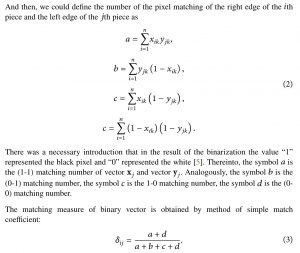
    You can read this article at Hindawi to find out. As an example here are a couple of formulas that they use to do this task.

    Formula for deciphering shredded paper.

    Legal requirements for shredding.

    Here are just a few legal requirements you should know about:

    Unshredding documents in the news.

    If you follow this link you will see all kinds of stories of shredding and un-shredding documents in the news.


    wtvr.com

    Restaurant employee, customer info discovered unshredded …All documents, she realized, belonged to the Outback Steakhouse in the West End of Henrico County. “It said Outback Steakhouse and printed …Jan 8, 2020

    KTVU San Francisco

    Personal medical files were discovered unshredded and dumped at a landfillLedesma took photos of the boxes and the files and called some of the lawyers listed on the documents. She said they didn’t seem too …Oct 3, 2019

    The Straits Times

    Unshredded confidential papers trashed in CBD a gold mine …Documents containing valuable information are ending up in the trash, unshredded, and making for easy pickings for unauthorized people.Jan 27, 2019

    The SunUnshredded NHS records were dumped in a town center to weigh down scaffolding at an art festivalIt is understood organizers contacted CS Recycling in Hertfordshire, which sent cut and part-shredded paper. most read in UK news …Sep 23, 2019

    TPM

    Warren Pledges To Release Impeachment Docs Withheld By …Great idea, Liz, but what makes you think there will be any documents left unshredded/unwiped to release? Or that Hair Furor will even be …Jan 24, 2020

    Peace Arch NewsWhite Rock shredding company says privacy breach allegations are ‘simply untrue’“The allegations that we store unshredded documents in bins at our truck … “No documents, casino cards or any other papers should ever be in …Mar 20, 2019

    13WHAM-TV

    Office of Public Integrity: local DMV offices mishandled …Some unshredded documents were found inside dumpsters at the DMV offices in Henrietta and Irondequoit earlier this year. (WHAM photo). Sep 6, 2018

    The Straits TimesMAS probes case of UOB’s unshredded client data

    The bank had also thrown out unshredded documents – marked confidential – of a performance report that highlighted a mix of assets and …Jul 19, 2016

    13WHAM-TV

    Lawmakers demand answers after personal info found in …The unshredded documents were found inside dumpsters at the DMV offices in Henrietta and Irondequoit. On Friday, Monroe County GOP …May 25, 2018

    13WHAM-TV

    County to offer free credit monitoring, investigate the handling of …The unshredded documents containing people’s personal information were found inside dumpsters at the DMV offices in Henrietta and …May 29, 2018

    Related Blog Posts