Over the course of this guide, you will learn how to securely destroy protected health information (PHI) to meet HIPAA requirements, assess retention and disposal timelines, and choose professional shredding options that render records irrecoverable. You’ll get clear steps for on-site and off-site shredding, documentation practices like Certificates of Destruction, and how Country Mile Document Destruction supports your compliance and patient privacy through ISO-certified, auditable processes.
Understanding HIPAA Compliance
You must implement administrative, technical, and physical safeguards under HIPAA’s Privacy and Security Rules (enacted 1996), including written policies, workforce training, business associate agreements, and documented destruction procedures; HHS penalties range from $100 to $50,000 per violation, so your shredding processes and Certificates of Destruction directly affect compliance.
Overview of HIPAA Regulations
HIPAA’s Privacy Rule governs uses and disclosures of PHI, the Security Rule requires safeguards for ePHI, and the Breach Notification Rule obligates you to report breaches affecting 500 or more individuals to HHS and the media; you must also execute BAAs with vendors and maintain audit trails for disposal and access.
Importance of PHI Protection
Protecting PHI preserves patient trust and reduces identity-theft exposure. Data breaches have exposed millions of records nationally, and help you avoid OCR investigations; civil fines can reach $50,000 per violation, and serious incidents have resulted in six-figure penalties and criminal prosecution.
To operationalize protection, you must shred paper to cross-cut standards, render hard drives unrecoverable with certified destruction, adhere to retention schedules (HIPAA often requires ten years), train staff on chain-of-custody, obtain Certificates of Destruction, and keep logs and BAAs ready for auditors and for remediation within the 30-day correction window.
Types of Medical Documents to Shred
You handle many document types that require secure destruction: patient charts, billing records, consent forms, lab results, and imaging reports. Shred any paper containing one or more of the 18 HIPAA identifiers-names, SSNs, dates, medical record numbers, or full-face photos-as well as appointment logs and billing remittances; examples include EOBs and insurance claims. Use cross-cut shredding or certified off-site services to meet audit demands. Thou must treat each category as PHI and dispose of it according to retention and state laws.
- Patient charts and clinical notes
- Billing, claims, and EOBs
- Lab results and pathology reports
- Imaging reports and films/PACS exports
- Prescriptions, consent forms, and appointment logs
| Patient Charts | Progress notes, diagnoses, treatment plans; retain per state law, shred after retention |
| Billing & Insurance | Claims, EOBs, payment records with SSNs or account numbers; high risk for identity theft |
| Laboratory & Pathology | Test results, specimen logs; include identifiable specimen labels and accession numbers |
| Imaging & Radiology | Reports, CDs, DICOM exports from PACS; contains dates, identifiers, and clinical findings |
| Medication & Consent | Prescriptions, medication histories, and signed consents often include signatures and dates |
Identifiable Health Information
You must shred documents containing any of the 18 HIPAA identifiers: name, address, SSN, DOB, MRN, insurance numbers, biometric data, and full-face photos. Examples include signed consent forms, clinical notes with diagnoses, lab worksheets, and immunization records. HIPAA defines PHI as individually identifiable health information linked to these identifiers, and improper disposal has resulted in fines of $100 up to $50,000 per violation when not corrected. Ensure documented chain-of-custody for shredded batches to support audits and breach investigations.
Electronic Records
You should treat ePHI-EMR/EHR exports, PACS images, backup tapes, hard drives, USBs, and cloud exports like paper PHI; simple file deletion or formatting won’t render data unrecoverable. Apply NIST SP 800-88 sanitization methods (clear, purge, destroy) and use validated tools: degaussing or crypto-erase for magnetic media, and physical destruction for media that cannot be reliably sanitized. For third-party or cloud vendors, verify contractual deletion, encryption-at-rest, and obtain Certificates of Destruction.
You must assess media type before disposal: HDDs can be degaussed or physically shredded, while SSDs typically require crypto-erase or physical destruction because degaussing is ineffective. Follow NIST SP 800-88: use “clear” only for reuse in controlled environments, “purge” (degauss/crypto-erase) when retiring equipment, and “destroy” for devices at the end of life or with failed hardware. Also, verify vendor audit reports, maintain chain-of-custody logs, and secure Certificates of Destruction to demonstrate compliance during inspections.
Tips for Effective Medical Document Shredding
You should treat shredding as an operational process tied to retention schedules, secure collection, and verifiable destruction:
- Align disposals with HIPAA/state retention (HIPAA guidance: retain records up to 10 years).
- Use locked consoles emptied weekly or by volume; schedule mobile on-site shredding for high-volume clinics.
- Demand cross-cut destruction and a Certificate of Destruction (COD) with chain-of-custody documentation. Country Mile Document Destruction does more than cross-cut. It reduces the paper to a recyclable pulp.
This helps you demonstrate compliance during audits and reduce PHI exposure risk.
Selecting a Reliable Shredding Service
Vet providers by requesting certifications (NAID AAA, ISO 9001), proof of background checks, $1M+ liability coverage, SOC/SSAE reporting, GPS-tracked on-site trucks, and a COD for every job; insist on cross-cut, particle-size specs, or to be reduced to a pulp, and sample audit logs so you can verify destruction metrics and chain-of-custody at any time.
Employee Training and Awareness
Train staff at onboarding and annually, with 15-30 minute role-based modules and quarterly refreshers; require signed acknowledgement, track completion rates (target >95%), and run monthly spot checks of locked bins so your team consistently follows shredding protocol and retention rules.
Expand training with hands-on exercises: run quarterly mock audits where randomly selected bins are audited for misfiled PHI, document corrective actions, and include tabletop incident-response drills yearly; track KPIs such as audit pass rate and incident count monthly to show continuous improvement and support compliance records.
Step-by-Step Shredding Process
| Step | Action |
|---|---|
| Pre-Shredding | Inventory, segregate PHI, use locked consoles, document chain-of-custody, and schedule pickups |
| Shredding | On-site mobile or off-site facility; cross-cut, micro-cut for paper, or reduce to a recyclable pulp; degauss/physically destroy for drives |
| Post-Shredding | Collect Certificate of Destruction (COD), log weights/dates, and verify recycling or secure disposal |
Pre-Shredding Preparations
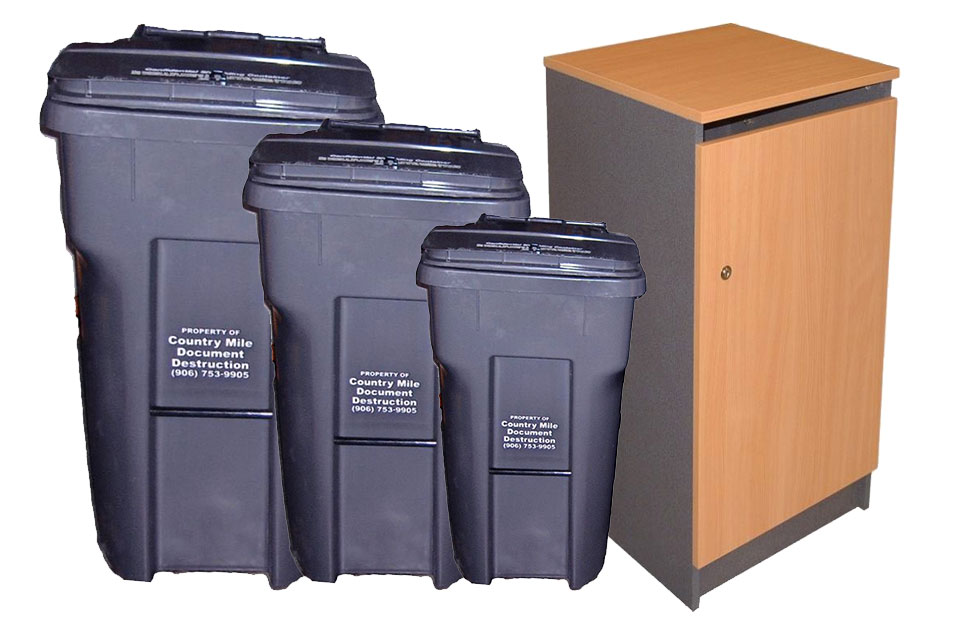
You inventory and classify records by retention rules, remove non-PHI materials, and place PHI in locked consoles or sealed bags. Use signed chain-of-custody forms that list date, time, employee ID, and estimated weight at pickup. Train staff on separation and labeling; for example, a 50-provider clinic reduced misfiled PHI by 60% after instituting weekly audits and locked drop-boxes.
Shredding Methods and Techniques

You choose between on-site mobile shredding, where a truck shreds in view, and off-site facility shredding with secure transport. For paper PHI, require cross-cut or micro-cut shredders that render documents indecipherable; for electronic media, follow NIST SP 800-88 guidance. On-site visits can be scheduled weekly, monthly, or for single cleanouts, depending on your document volume.
For greater assurance, select DIN 66399 P‑4 or higher for confidential medical files and consider micro-cut for billing/consent forms. For hard drives, combine degaussing and physical destruction or HDD crushers that fracture platters; solid state drives need physical pulverization or NIST‑recommended sanitization. Many providers log shredded tonnage and provide video or witness options for high-risk disposals.
Post-Shredding Procedures
You obtain a Certificate of Destruction that lists date, method, weight, and provider signature, and retain it in your compliance files. Verify the COD matches your pickup log and chain-of-custody records. Also, confirm whether shredded material is recycled or incinerated, and request recycling receipts when environmental reporting matters to your organization.
After shredding, archive CODs and pickup logs to support audits and HIPAA inquiries; include photos or timestamps if available. Audit your vendor quarterly for diversion rates and secure transport compliance, and test a sample of shredded output periodically to ensure particle size meets your policy. This helps demonstrate that PHI was rendered unreadable and irreconstructible.
Factors to Consider for Shredding Services
You should evaluate security, certifications, and operational details before signing a contract:
- On-site vs. off-site shredding – on-site reduces transit exposure
- Chain-of-custody, BAAs, and audit logging
- Shred type – cross-cut or micro-cut, particle size, or a recyclable pulp
- Certificate of Destruction and retention of receipts
After you select a vendor, require periodic audits and monthly pickup records to verify ongoing compliance.
Compliance with HIPAA Standards
You must ensure your vendor will sign a Business Associate Agreement (BAA), maintain chain-of-custody documentation, provide a Certificate of Destruction, and use shredding methods that render PHI unreadable and unreconstructible; NAID AAA or ISO 9001 certifications, plus on-site shredding options and detailed audit logs, materially reduce your exposure to fines ranging from $100 to $50,000 per violation.
Environmental Considerations
You should choose shredding services that recycle shredded paper and responsibly handle e-waste, verifying diversion rates and recycling partners to avoid landfill or incineration and to support your sustainability goals.
Request specific metrics from providers: percentage of material diverted from landfill, names of paper mills or pulping facilities, and electronics certifications such as R2 or e-Stewards; for example, a vendor that documents >90% diversion with mill receipts and offers on-site mobile shredding demonstrates both secure destruction and reduced CO2 from fewer transport trips.
Pros and Cons of Using Professional Shredding Services
Pros and Cons of Professional Shredding Services
| Pros | Cons |
|---|---|
| Regulatory compliance support with Certificates of Destruction and chain-of-custody records. | Higher recurring cost compared with in-house shredders and staff time. |
| Certified destruction methods (cross‑cut, ePHI sanitization) that meet HIPAA standards. | Scheduling constraints – pickups often follow weekly or monthly routes, not immediate on demand. |
| On‑site mobile shredding lets you watch the destruction and reduces reconstruction risk. | Off‑site services introduce transport windows unless you require on‑site destruction. |
| Audit trails and documentation simplify audits and are ISO 9001 certified by NSF‑ISR. | Contracts or minimums may apply, creating fixed costs for smaller practices. |
| Frees staff time – you avoid training, supervision, and retention liability for shredded PHI. | Vendor vetting needed; inadequate providers can expose you to compliance risk. |
| Recycling and responsible disposal pathways for paper and e‑waste. | Additional fees can apply for hard‑drive or specialty media destruction. |
| Reduces risk of HIPAA fines (civil fines up to $50,000 per violation; criminal penalties possible). | Peak‑season or last‑minute cleanouts may incur rush fees or delays. |
Advantages of Professional Services
You gain documented compliance-Certificates of Destruction, chain‑of‑custody logs, and certified cross‑cut or ePHI destruction-that help you avoid HIPAA fines (civil penalties can reach $50,000 per violation) and simplify audits. Many vendors, including ISO‑certified providers, offer on‑site mobile shredding so you can verify destruction, schedule regular pickups, and eliminate staff time spent handling PHI.
Potential Drawbacks
You may face higher recurring costs, minimum‑volume contracts, and scheduling limits that don’t match urgent needs; off‑site shredding can introduce short transport windows unless you insist on on‑site destruction. Vetting vendors for certifications and insurance is necessary to avoid added compliance risk.
In practice, you should request the vendor’s COD, proof of ISO or SOC reports, background check policies, and insurance limits before signing. Some providers charge per bin or per pound and impose minimum monthly fees, so compare quotes and contract terms; if you need immediate disposal for a one‑time purge, expect one‑time or rush fees. Choosing on‑site mobile shredding removes most transport concerns and preserves a visible audit trail.
Summing up
So you must ensure your practice disposes of PHI by rendering it unreadable and unrecoverable; use certified HIPAA-compliant shredding services like Proshred®️ Security for on-site or off-site cross-cut destruction, documented with Certificates of Destruction, to meet retention rules, reduce liability, and protect your patients’ privacy.
Related Blog Posts
- The Importance of a Clean Desk Policy
- Guide to HIPAA Compliant Medical Document (PHI) Shredding
- HIPAA Compliance in Healthcare Apps: Top 5 Developer Questions Answered
- Healthcare Data Breaches 2024: A Year of Unprecedented Cyber Attacks
- 2024 Healthcare Data Breaches: A Wake-Up Call for the Industry
- HIPAA Security Rule Update: Strengthening Cybersecurity in Healthcare
- HIPAA Requirements for Document Destruction: A Comprehensive Guide
- Navigating the Health Insurance and Portability Act
- HIPAA Law Meaning
- HIPAA Document Shredding: Protecting Patient Privacy
- Data and Paper Destruction Laws
- What Businesses want to know about Document Destruction
- Why It Can Be Against The Law If You Don’t Destroy Your Documents Correctly